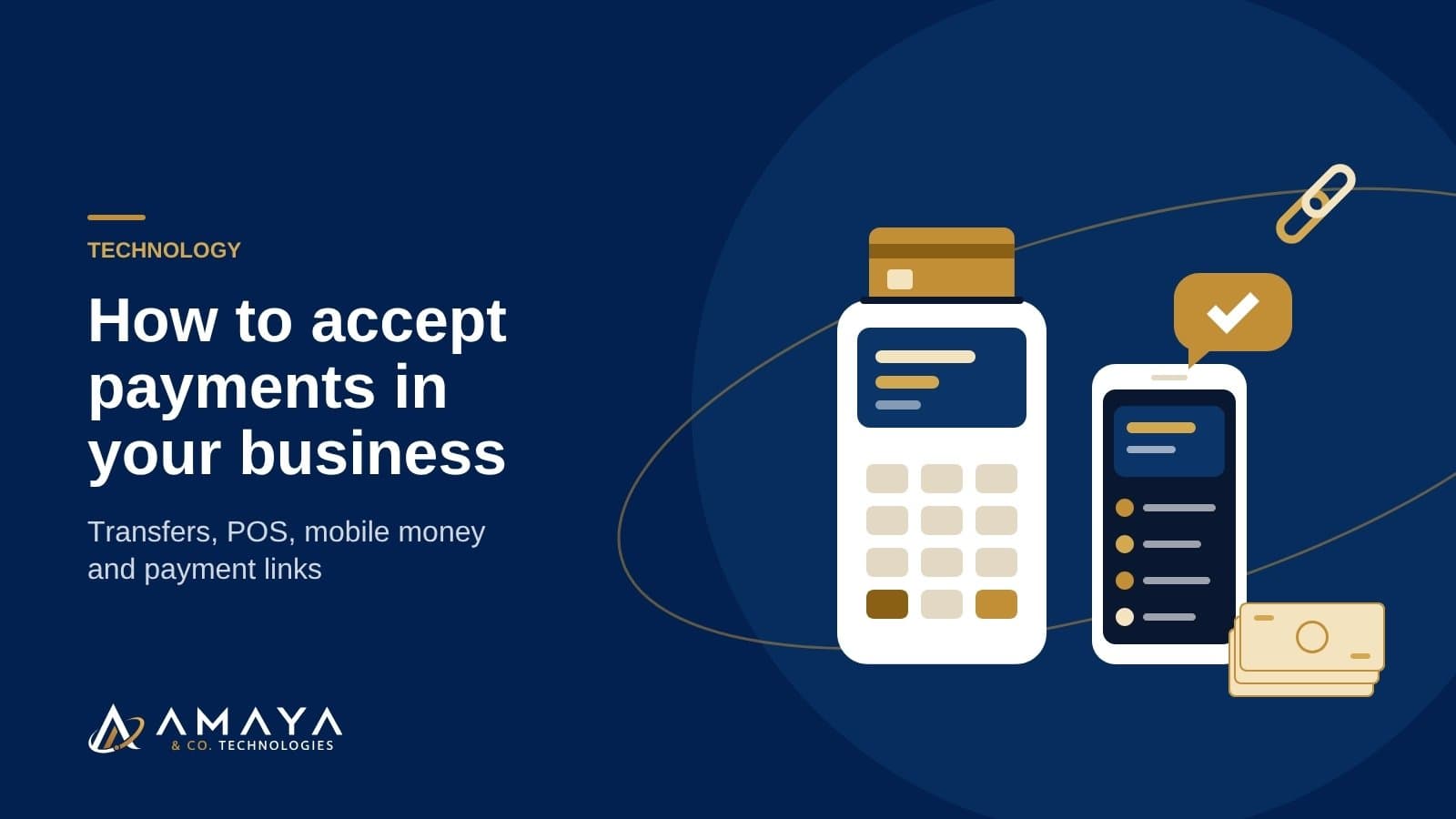
The main ways to accept payments
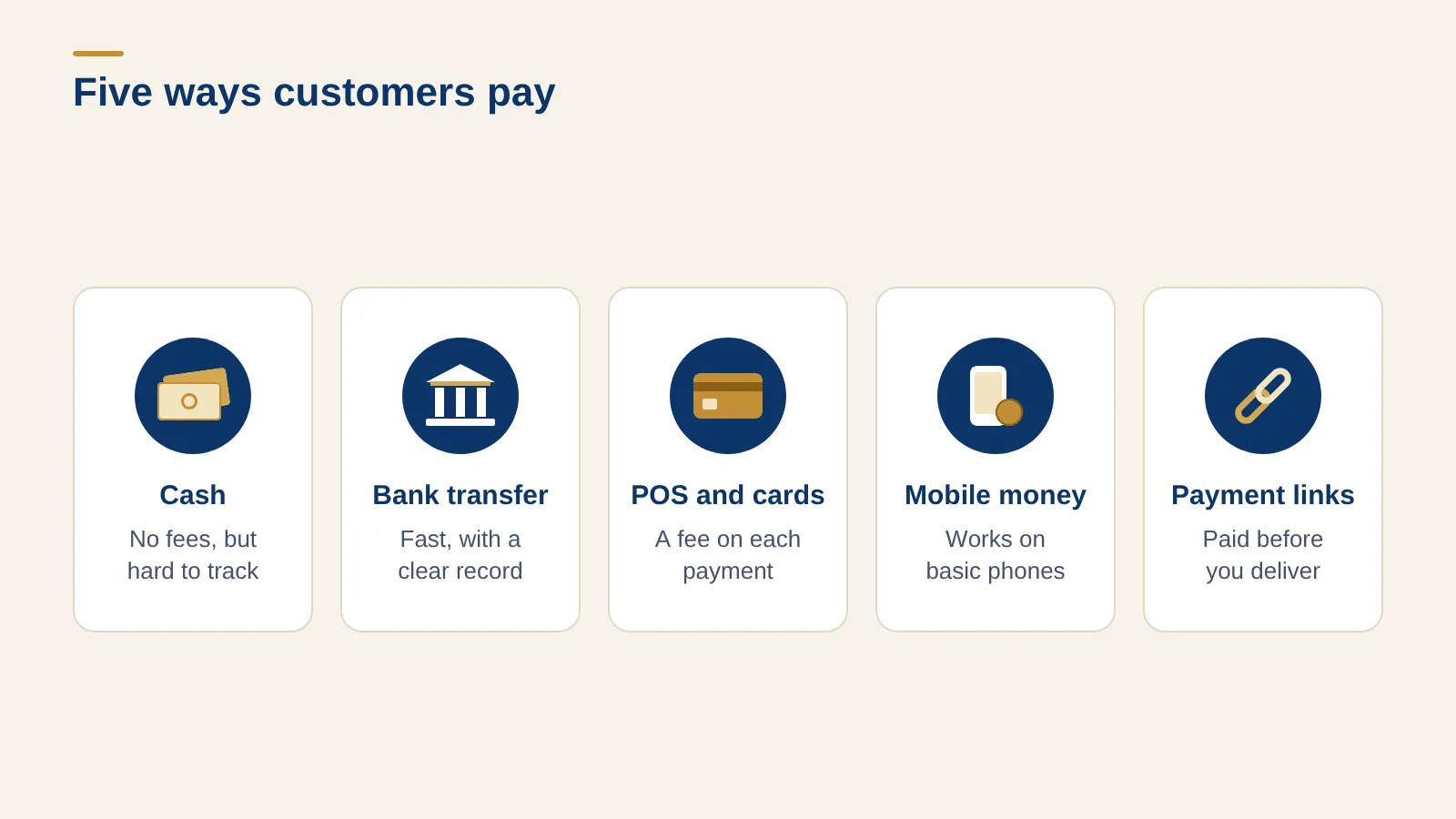
Cash
Still essential in many markets: no fees and no network needed. But cash can be lost or stolen, it is hard to track, and it leaves no record a bank or lender can see. If you take cash, record every cash sale the moment it happens.
Bank transfers
Customers send money straight from their bank app to your account — very common where instant bank transfers are available.
- Pros: money lands quickly, little or no cost to you, and a clear record.
- Watch out for: fake transfer alerts (see below), and money landing in a personal account that is mixed up with family spending.
Tip: use a dedicated business account or virtual account, so every transfer is clearly business money.
POS terminals and cards
Card machines — from banks or payment companies — let customers pay with debit cards.
- Pros: customers without cash can still buy; payments are recorded.
- Costs: a fee on each transaction, sometimes a monthly charge, and the risk of network failures at busy times.
Tip: know exactly what you pay per transaction, and build it into your prices. Our guide to markup vs margin shows how.
Mobile money
In many African countries, mobile money wallets on a phone are the main way people pay — no bank account needed.
- Pros: works on basic phones, very widely used, instant.
- Costs: withdrawal or merchant fees, depending on the provider and country.
Tip: where available, use a merchant or business till number rather than a personal wallet, so business payments are separate and easier to track.
Payment links and online checkout
Payment gateways let you send customers a link — by WhatsApp, SMS or email — to pay by card, transfer or wallet, or add checkout to a website.
- Pros: perfect for orders taken on WhatsApp or social media; customers pay before you deliver.
- Costs: a percentage fee per transaction, usually capped or tiered.
Beware of fake payment alerts
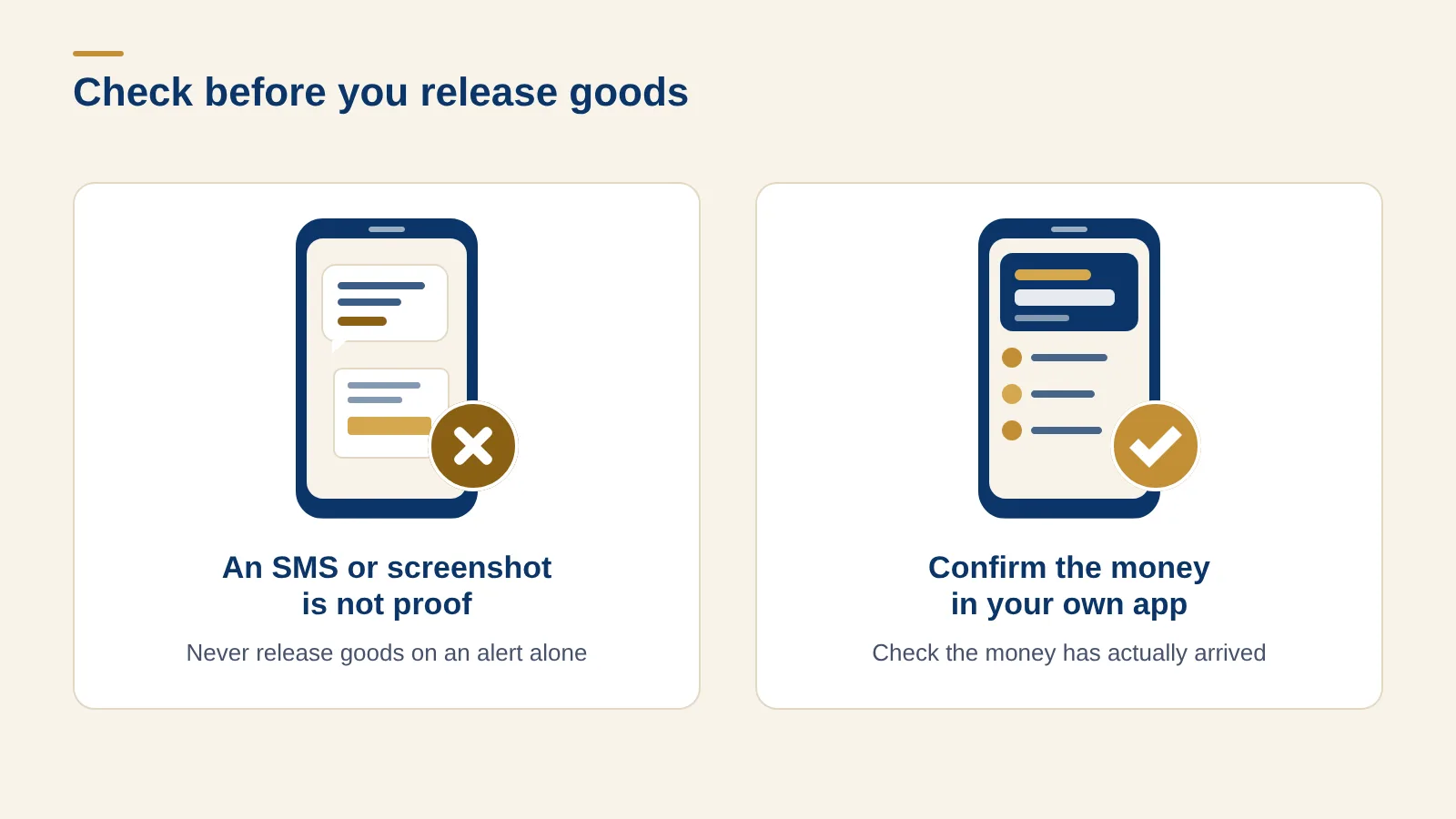
A common fraud is the fake "credit alert" — a forged SMS or screenshot claiming a customer has paid.
- Never release goods based on an SMS or screenshot alone.
- Confirm in your own banking or wallet app that the money has actually arrived.
- Train staff to do the same, especially during busy periods.
- Be extra careful with large amounts, new customers and "I've sent it, check later" pressure.
Match every payment to a sale
The more payment methods you accept, the harder it gets to know which payment belongs to which sale. At the end of the day you should be able to answer:
- How much did we sell, and how was each sale paid?
- Does the money in the bank, wallet and cash box add up to what we sold?
- Which sales were on credit, and who still owes us?
If you cannot answer quickly, money is probably leaking somewhere — through errors, unrecorded sales or fraud. Our guide to calculating your real business profit covers a simple daily routine.
Keep it simple
- Accept the methods your customers actually use — usually two or three, not all of them.
- Display your payment details clearly (account name, number, or till) so customers do not send money to the wrong place.
- Separate business and personal money in every method.
- Record the payment method with every sale.
How KudiAI Track helps
KudiAI Track records each sale with how it was paid — cash, transfer, POS or credit — so your daily totals match the money you actually received. Its wallet gives your business a dedicated virtual account to receive customer payments by bank transfer and send money to any Nigerian bank, and every receipt carries a reference that can be verified.
Book a demo to see it in action. Businesses building their own payment flows can talk to us about fintech solutions.
However you accept payments, match every one to a sale — that habit protects you from fake alerts and missing money.