Where small businesses borrow
- Commercial banks — often the lowest cost for businesses with strong records, but usually the strictest requirements.
- Microfinance banks and institutions — smaller loans, often more flexible about collateral, sometimes with group lending.
- Cooperatives and thrift groups — loans to members from pooled savings, usually based on your contribution history.
- Digital lenders and fintech apps — fast decisions using your transaction data, but check the full cost carefully.
- Supplier credit — goods now, payment later. It is a form of borrowing, and often the cheapest one if you pay on time.
- Government or development programmes — where available, often with specific eligibility rules. Use official channels only and never pay "agents" to get a place.
What lenders want to know
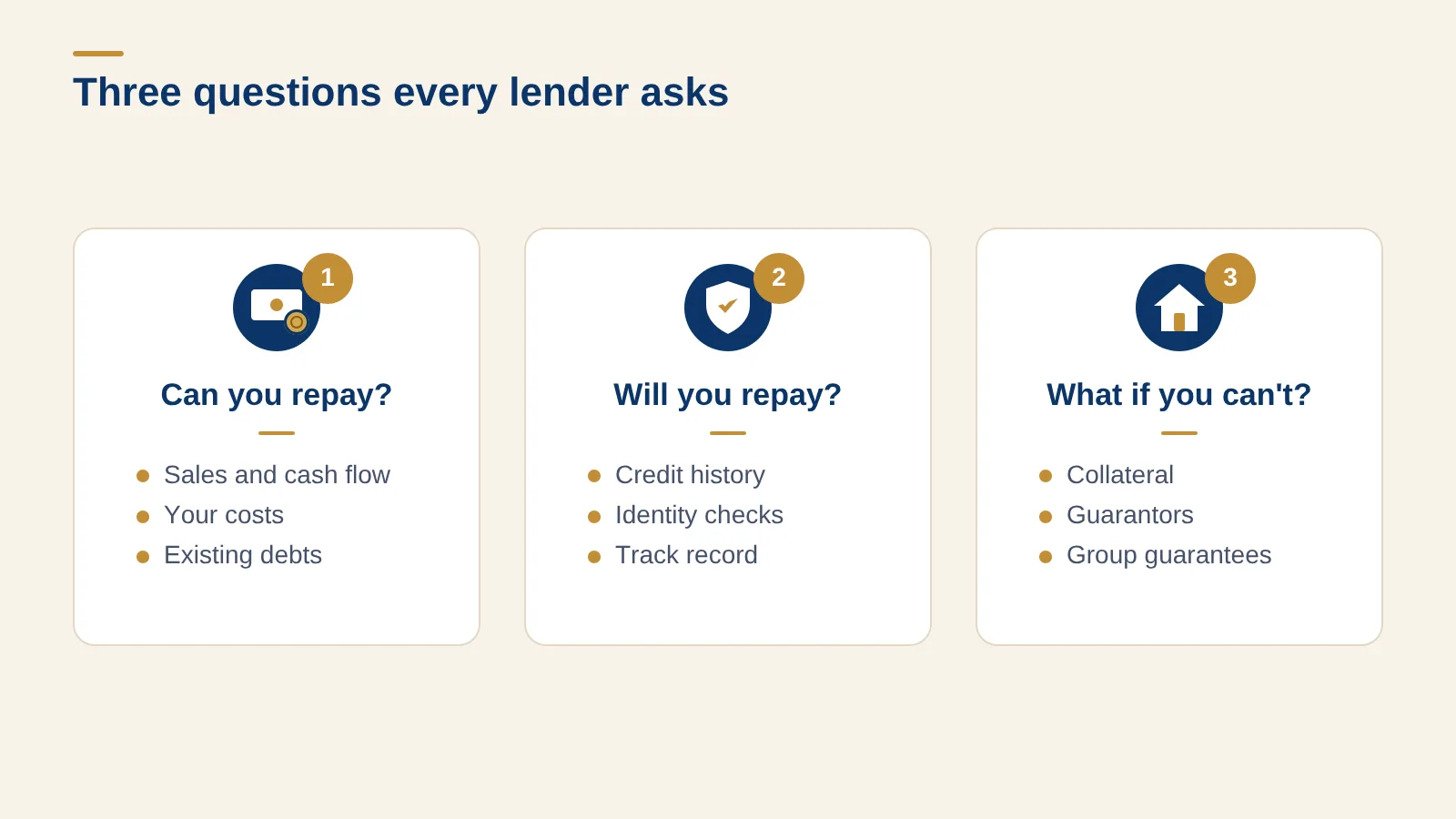
Every lender, whatever their process, is trying to answer three questions.
1. Can you repay?
This is the most important question. Lenders look at:
- Your sales and cash flow — how much comes in each month, and how steady it is.
- Your costs — how much goes out, so they can see what is left to pay the loan.
- Your existing debts — what you already owe and to whom.
The clearest way to answer is with records: at least three to six months of sales and expenses, and bank or wallet statements that match them. A business that can show its numbers is far easier to lend to than one asking to be trusted. Our guide to calculating your real business profit shows what to record.
2. Will you repay?
Lenders check your history:
- Credit history — many countries have credit bureaus that record how you have repaid past loans. Missed repayments, even small ones, can count against you.
- Identity checks — such as your national ID number and bank verification details.
- Track record — how long the business has run, and any past loans repaid on time, including cooperative loans.
3. What happens if you can't?
To reduce their risk, lenders may ask for:
- Collateral — property, equipment or other assets they can claim if you default.
- Guarantors — people who agree to repay if you cannot.
- Group guarantees — common in microfinance, where members guarantee each other.
A small business loan checklist
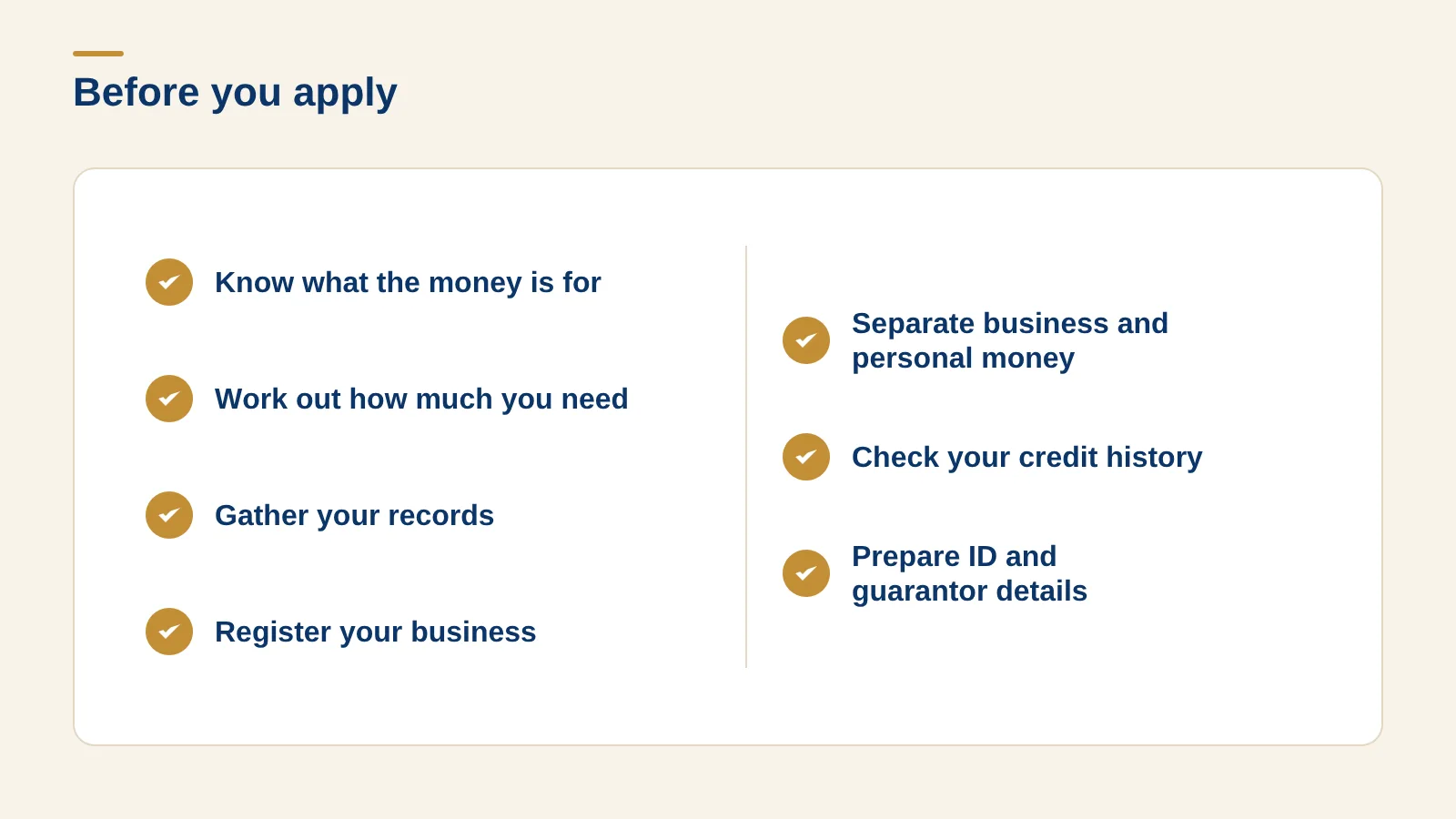
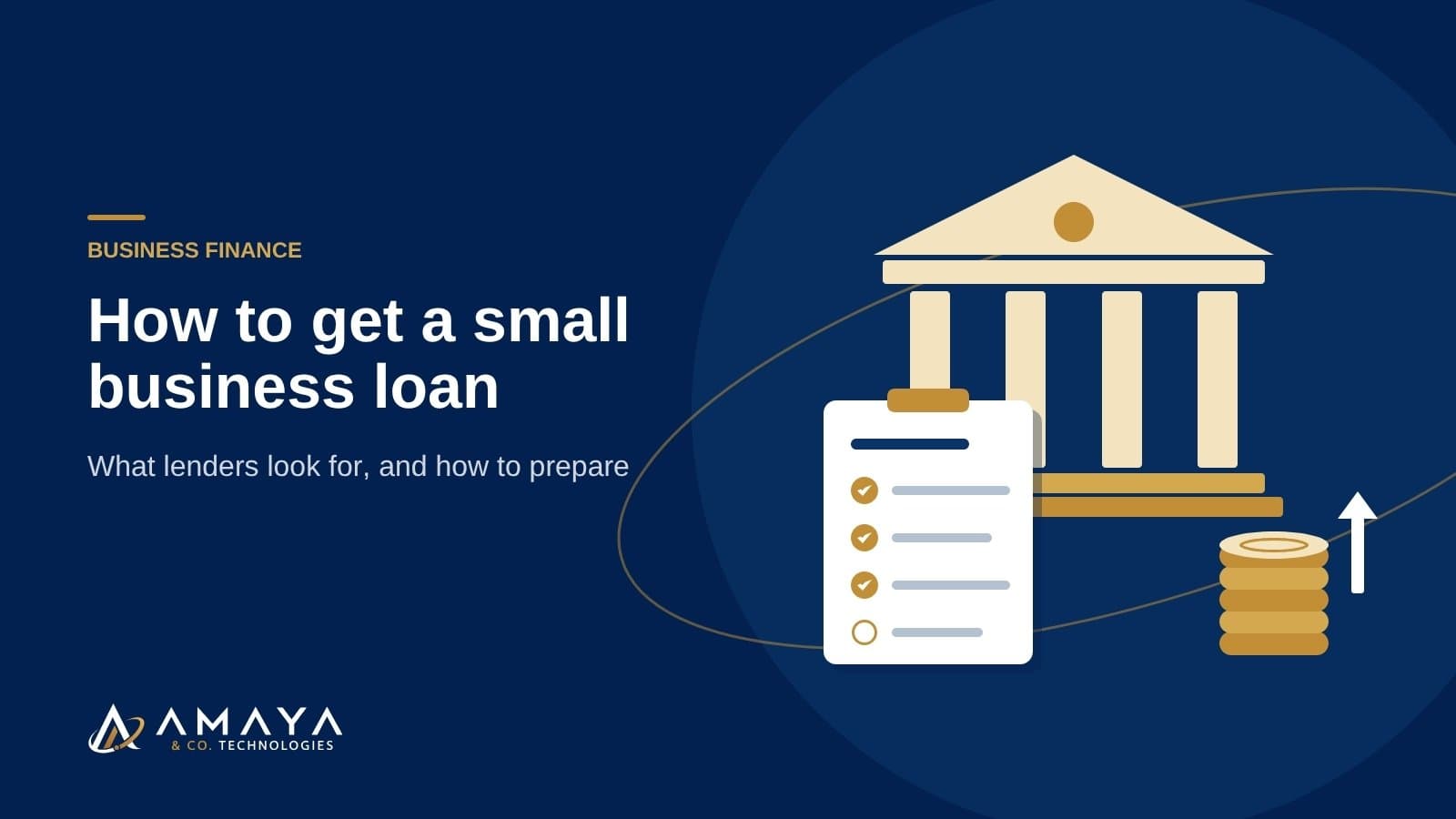
- Know exactly what the money is for, and how it will earn back more than it costs. "To grow" is not enough; "to buy stock in bulk at a 10% discount" is.
- Work out how much you need — not more. Bigger loans cost more and are harder to repay.
- Gather your records — sales, expenses, stock and statements for at least three to six months.
- Register your business if you have not. Many lenders want to see registration documents. See our guide to registering a business name (for Nigeria).
- Separate business and personal money, ideally with a business bank account.
- Check your credit history and settle any overdue debts first.
- Prepare identity documents and, if needed, guarantor details.
Choosing a loan you can repay
Before you accept any offer, find out:
- The total cost — interest plus all fees, insurance and charges. Ask: "If I borrow this amount, how much will I pay back in total?"
- How the interest is calculated — a "flat" rate on the original amount usually costs more than the same rate on a reducing balance.
- The repayment schedule — daily, weekly or monthly — and whether it matches when your business earns money.
- Penalties for paying late, and whether you can repay early without extra charges.
A simple rule: your repayment should be comfortably smaller than what your business has left each month after all costs. If repaying would take everything you earn, the loan is too big or too expensive.
Warning signs
- A lender asks for a fee before approving or paying out your loan.
- You are pressured to sign quickly, or the full cost is not written down.
- A lender demands access to your phone contacts or threatens to shame you to family and friends.
- An "agent" promises guaranteed approval for a payment.
Walk away and report it to the relevant authority if anything feels wrong.
How good records make borrowing easier
The single biggest thing you can do to borrow on better terms is to keep clean, consistent records — so that when a lender asks how your business is doing, you can show them rather than tell them.
KudiAI Track records your sales, expenses, stock and customer credit from your phone and produces profit-and-loss and cash-flow reports you can export as PDF — the kind of history lenders ask for. On its premium plan, KudiAI Track also lets businesses apply for loans through partner lenders. Book a demo to see how it works.
The best small business loan is one you can repay from the business's real cash flow — and good records are how you prove it.